Introduction
These 36 deep questions are for couples who want to reconnect — married partners in a busy season, long-distance couples bridging the gap, and anyone who loves someone but has slipped into logistics instead of intimacy. You do not need a perfect relationship to use them. You just need a quiet hour and a little willingness to be honest.
Use them on a slow evening, a long drive, or the night before something big. Ask them in order or skip around. The only rule is that you both actually answer — and that you listen to the reply like it matters, because it does.
Do you ever feel like you and your partner talk every day, but somehow still miss each other?
You discuss dinner. Bills. Work. The kids. The dog. The group chat. The broken thing that still needs fixing. But the real conversations? The ones that make you feel seen, chosen, understood, and emotionally close? Those can quietly disappear.
It happens to so many couples.
One day, you realize you know your partner’s schedule better than you know their inner world. You know what time they have a meeting, but not what has been weighing on their heart. You know what they want from the grocery store, but not what they secretly miss about your relationship.
That can feel scary. But here’s the good news: reconnection does not always require a dramatic vacation, a perfect date night, or a complete relationship reset. Sometimes, it begins with one honest question.
These 36 deep questions for couples who want to reconnect are designed to help you slow down, talk more intentionally, rebuild emotional intimacy, and understand each other again. Some questions are gentle. Some are vulnerable. A few may open conversations you have been avoiding. But each one can help you move beyond surface-level communication and back toward real connection.
Use them slowly. Use them kindly. Most importantly, use them with curiosity.
Why Deep Questions Help Couples Reconnect
Deep questions work because they invite partners to move from autopilot into presence.
In long-term relationships, it is easy to assume you already know everything about each other. You know their coffee order. Their favorite show. Their habits. Their stress signals. But people keep changing. Your partner is not the exact same person they were one year ago, five years ago, or even six months ago.
That is why meaningful relationship questions matter. They give couples a way to keep discovering each other.
Deep conversation starters for couples can help you:
- Build emotional intimacy
- Improve communication
- Rebuild trust
- Feel more emotionally safe
- Understand each other’s needs
- Talk about conflict without immediately arguing
- Rediscover romance, affection, and friendship
- Create shared relationship goals
- Strengthen your long-term bond
The goal is not to interrogate your partner. It is not to force a dramatic breakthrough. And it is definitely not to “win” the conversation.
The goal is to listen.
When couples ask thoughtful questions and respond with care, they create small moments of connection. Over time, those moments can become a stronger foundation for emotional closeness, healthy communication, and relationship repair.
How to Use These Questions as a Couple
Before jumping into the questions, set yourselves up for a conversation that actually feels safe.
Deep relationship questions can be powerful, but timing matters. Asking your partner, “What do you need from me emotionally?” while they are rushing out the door or exhausted after a stressful day probably will not lead to the best answer.
Choose a time when you can both be present.
Here are a few simple guidelines:
- Pick a quiet moment when neither of you is distracted.
- Put your phones away or place them face down.
- Take turns answering the same question.
- Do not interrupt, correct, or debate your partner’s feelings.
- Ask follow-up questions like, “Can you tell me more about that?”
- Avoid using your partner’s answers against them later.
- Take a break if the conversation becomes too emotional.
- End with appreciation, reassurance, or affection.
You do not need to answer all 36 questions in one sitting. In fact, you probably should not.
Choose three to five questions for a date night, a walk, a quiet evening at home, or a weekly relationship check-in. Let the conversation breathe. Some answers may surprise you. Some may hurt a little. Some may bring you closer immediately.
The magic is not in rushing through the list. It is in creating space for honesty.

36 Deep Questions for Couples Who Want to Reconnect
Below are the 36 questions, organized by theme. You can go in order, choose the section that fits your relationship right now, or write the questions on cards and pull one at random.
Questions to Rebuild Emotional Intimacy
Emotional intimacy is the feeling that your partner knows your inner world and wants to understand it. It is not just about love. It is about safety, tenderness, attention, and trust.
If you have been feeling distant, start here.
1. What have you been feeling lately that I may not fully understand?
This question gives your partner permission to share what may be happening beneath the surface. They might be stressed, lonely, discouraged, overwhelmed, hopeful, or quietly afraid.
Try not to assume you already know the answer. Listen for what has been unspoken.
2. When do you feel most emotionally close to me?
This helps you understand what actually creates connection for your partner. Their answer may be different from yours. They might feel close during deep talks, physical affection, shared laughter, acts of service, quiet time, or small daily check-ins.
Once you know what helps them feel close, you can do more of it intentionally.
3. What is something you wish I asked you more often?
This is a beautiful question because it reveals emotional needs that may not be obvious. Your partner might want you to ask about their dreams, their stress, their friendships, their work, their fears, or how they are really doing.
Sometimes people stop sharing not because they do not want to, but because they do not feel invited.
4. What part of our relationship makes you feel safest?
Safety is one of the foundations of a healthy relationship. This question helps you identify what is already working.
Maybe your partner feels safe because you are loyal. Maybe because you show up. Maybe because you make them laugh. Maybe because you keep choosing them even during hard seasons.
Notice their answer. Protect it.
5. Is there anything you have been carrying alone that you want me to know?
This is a tender question. Ask it gently.
Your partner may be carrying stress, grief, insecurity, resentment, pressure, or fear that they have not known how to share. The goal is not to fix everything immediately. The goal is to let them know they do not have to carry it alone.
6. What helps you feel truly seen and heard by me?
Feeling seen is different from simply being noticed. It means your partner feels understood, valued, and emotionally recognized.
Their answer may give you practical ways to improve emotional connection, such as making eye contact, remembering details, asking follow-up questions, validating their feelings, or being more present during conversations.

Questions to Improve Communication
Communication is not just about talking more. Many couples talk constantly and still feel disconnected.
Healthy communication means both people feel heard, respected, and safe enough to be honest. These questions can help you understand each other’s communication styles and reduce misunderstandings.
7. What kind of conversations do you wish we had more often?
Your partner may want more playful conversations, more future-focused conversations, more emotional check-ins, more spiritual conversations, or more honest talks about the relationship.
This question helps you move beyond logistical communication and into meaningful connection.
8. When we disagree, what helps you feel respected?
Conflict is not automatically a problem. In fact, every couple disagrees. The bigger issue is how you treat each other during those disagreements.
This question helps you learn what respect looks like to your partner in tense moments. They might need a calmer tone, less interrupting, more patience, or reassurance that the relationship is still secure.
9. What is one thing I do that makes it easier for you to open up?
This question highlights what you are already doing well.
Maybe your partner opens up when you listen without jumping in. Maybe they appreciate when you ask gentle questions. Maybe they feel safer when you sit beside them instead of across from them.
Keep doing the things that help honesty feel welcome.
10. What is one thing I do that makes it harder for you to talk honestly?
This question requires humility.
Your partner may say something that is difficult to hear. They might mention defensiveness, sarcasm, impatience, distraction, criticism, or shutting down. Try to receive the answer without arguing.
A helpful response is: “Thank you for telling me. I want to understand that better.”
11. How can we handle conflict in a way that feels healthier for both of us?
This question turns conflict into teamwork.
Instead of asking, “Who is right?” you are asking, “How can we do this better together?” That shift matters. It helps couples create shared rules for difficult conversations.
For example:
- Take breaks before things escalate.
- Avoid name-calling or insults.
- Stay focused on one issue at a time.
- Use “I feel” statements.
- Come back to the conversation after cooling down.
- Repair with kindness after conflict.
12. What do you need from me when you are upset?
Different people need different things when they are upset.
Some need space. Some need reassurance. Some need physical affection. Some need practical help. Some need to talk it through right away, while others need time to understand their own feelings first.
Knowing your partner’s needs can prevent a lot of accidental hurt.
Questions to Rebuild Trust and Vulnerability
Trust is built through consistency, honesty, emotional safety, and repair. If trust has been strained, these questions can open the door to healing.
Move slowly through this section. These are not casual questions. They require care.
13. What does trust mean to you in our relationship right now?
Trust can mean different things to different people.
For one person, trust may mean honesty. For another, it may mean emotional reliability. For someone else, it may mean keeping promises, being transparent, showing loyalty, or feeling chosen.
This question helps you define trust together instead of assuming you both mean the same thing.
14. Is there anything we need to repair or talk through more honestly?
Some couples drift because unresolved issues stay buried.
This question gives both partners a chance to name what still needs attention. It might be a past argument, a broken promise, emotional neglect, resentment, or a season when one partner felt alone.
The purpose is not to reopen wounds carelessly. It is to give healing a place to begin.
15. When have you felt most supported by me?
Rebuilding trust is not only about discussing pain. It is also about remembering evidence of love.
This question helps your partner recall moments when you showed up well. Those memories can remind both of you that the relationship has strength, not just struggle.
16. What makes it difficult for you to be vulnerable?
Vulnerability can feel risky. Your partner may fear rejection, judgment, being misunderstood, or seeming “too much.”
When you understand what makes vulnerability hard, you can become more careful with your partner’s openness.
17. How can I make you feel safer emotionally?
Emotional safety is essential for deep connection.
Your partner might say they need you to listen without dismissing their feelings. They might need more consistency, more softness, more honesty, or more follow-through.
This question is powerful because it moves love from intention into action.
18. What is something you are afraid to tell me but wish I understood?
Ask this only when you are ready to listen with compassion.
The answer may be vulnerable. It may involve fear, insecurity, disappointment, desire, or a truth your partner has been holding back. Your response matters.
Do not punish honesty. Honor it.

Questions to Rediscover Each Other
One of the most beautiful parts of a long-term relationship is watching each other grow. One of the most dangerous parts is forgetting to notice that growth.
These questions help you rediscover your partner as they are now, not just who they were when you first met.
19. What is something about you that has changed in the past year?
People change through stress, success, grief, healing, age, parenthood, career shifts, and personal growth.
Your partner’s answer may help you understand how their inner world has evolved.
20. What dream or goal feels important to you right now?
This question brings hope into the conversation.
Your partner might talk about a career goal, a creative dream, a health goal, a travel plan, a family desire, or a personal change they want to make. Listen closely. Their dreams reveal where their heart is moving.
21. What have you learned about yourself recently?
This is a thoughtful question for couples who want a deeper emotional bond.
Your partner may have discovered something about their boundaries, needs, fears, values, or strengths. Their answer can help you support who they are becoming.
22. What do you miss about who you used to be?
This question can bring up nostalgia, grief, or longing.
Your partner may miss being more carefree, confident, adventurous, social, creative, or rested. Instead of rushing to reassure them, ask what would help them reconnect with that part of themselves.
23. What is something you want more of in your life?
This question can reveal unmet needs.
Your partner may want more peace, fun, friendship, rest, passion, purpose, adventure, alone time, affection, or spiritual connection. Their answer can also show you where the relationship can become more supportive.
24. What is one part of you that you wish I knew better?
Even in close relationships, some parts of a person can remain hidden.
This question invites deeper knowing. Your partner may want you to understand their childhood, ambition, sensitivity, anxiety, creativity, loneliness, humor, or inner pressure.
The answer can become a doorway into a more intimate relationship.

Questions to Bring Back Romance and Affection
Reconnection is not only emotional. It can also be romantic, playful, sensual, and affectionate.
In many relationships, romance fades not because love is gone, but because effort gets buried under routine. These questions can help bring tenderness and desire back into focus.
25. What makes you feel most loved by me?
This is one of the most important love questions for couples.
Your partner may feel loved through words, touch, quality time, help, gifts, loyalty, encouragement, or thoughtful details. Do not assume your way of showing love is the same as their way of receiving it.
26. What romantic memory between us still makes you smile?
Positive memories can reconnect couples with the emotional history they share.
Maybe it was your first date, a trip, a late-night conversation, a silly moment, a difficult season you survived together, or a small gesture that meant more than you realized.
Remembering love can help you rebuild it.
27. What kind of affection do you wish we shared more often?
Affection can include kissing, cuddling, holding hands, compliments, flirting, hugging, thoughtful texts, or simply sitting close.
This question helps couples talk about affection without blame. Instead of saying, “You never touch me anymore,” you are asking, “What kind of closeness would feel good to you?”
28. What is one small gesture that would make you feel cherished?
Small gestures matter.
A cup of coffee. A note. A long hug. A sincere compliment. A check-in text. Taking something off their plate. Planning a date. Remembering something important.
Often, feeling cherished comes from repeated small acts of love, not occasional grand gestures.
29. When do you feel most attracted to me emotionally or physically?
Attraction is not only about appearance. Emotional attraction can grow through kindness, confidence, humor, attentiveness, integrity, and vulnerability.
This question can help you understand what draws your partner toward you and what strengthens romantic connection.
30. How can we make our relationship feel more playful again?
Playfulness is underrated.
Couples need laughter, teasing, adventure, inside jokes, spontaneity, and lightness. If everything becomes serious, practical, or stressful, the relationship can start to feel heavy.
This question invites fun back into the relationship.
Questions About the Future of Your Relationship
Reconnection is not only about looking back or understanding the present. It is also about deciding what you want to build next.
These future-focused relationship questions can help you create shared direction.
31. What kind of relationship do you want us to build from here?
This question invites vision.
Your partner may want a relationship that feels calmer, more affectionate, more honest, more adventurous, more supportive, more passionate, or more emotionally connected.
Let the answer become a shared goal.
32. What do you hope we are better at one year from now?
This makes growth feel practical and measurable.
Maybe your partner hopes you communicate better, argue less harshly, spend more quality time together, rebuild trust, share responsibilities more fairly, or bring back romance.
A year from now, what would make both of you proud?
33. What shared goal would bring us closer?
Shared goals create teamwork.
This could be saving for something, improving health, planning a trip, creating a weekly date night, working on communication, starting therapy, building a home, or learning a new skill together.
The goal matters less than the sense of “we are in this together.”
34. How can we protect our relationship from stress and distance?
Life will keep bringing stress. The question is how you protect your connection in the middle of it.
Your answer might include:
- Weekly check-ins
- More quality time
- Better boundaries with work
- Less phone use at night
- More affection
- Earlier conflict repair
- Asking for help before resentment builds
Strong couples are not stress-free. They are intentional.
35. What traditions or rituals should we create together?
Relationship rituals keep couples connected.
They can be simple: Sunday coffee, Friday date night, a goodnight kiss, a morning walk, monthly goal-setting, cooking together, or asking each other one check-in question before bed.
Rituals give love a rhythm.
36. What does “reconnected” look and feel like to you?
This final question brings everything together.
Your partner’s definition of reconnection may surprise you. Maybe it means laughing again. Maybe it means feeling desired. Maybe it means fewer walls. Maybe it means more honesty. Maybe it means feeling like best friends again.
Once you both define reconnection, you can begin creating it on purpose.
Tips for Having a Meaningful Conversation
Asking deep questions is only the beginning. How you respond matters just as much.
Here are some practical tips for making these conversations feel safe, loving, and productive.
Listen to Understand, Not to Defend
It is natural to feel defensive when your partner shares something difficult. But defensiveness can shut down honesty quickly.
Try to listen for the feeling underneath the words. If your partner says, “I feel like you do not notice me anymore,” the deeper message may be, “I miss feeling important to you.”
Respond to the need, not just the wording.
Validate Before You Explain
Validation does not mean you agree with everything your partner says. It means you acknowledge that their feelings are real.
You can say:
- “I can understand why that hurt.”
- “Thank you for telling me.”
- “That makes sense.”
- “I did not realize you felt that way.”
- “I want to understand this better.”
Validation helps your partner feel emotionally safe. Once they feel heard, the conversation usually becomes softer.

Ask Follow-Up Questions
The best relationship conversations often happen after the first answer.
Try asking:
- “What was that like for you?”
- “How long have you felt that way?”
- “What do you need from me now?”
- “Can you give me an example?”
- “What would help us move forward?”
Follow-up questions show genuine curiosity. They tell your partner, “I am still here. I am still listening.”
Do Not Rush to Fix Everything
When someone you love is hurting, it is tempting to jump into solution mode.
But sometimes your partner does not need an immediate solution. They need presence. They need empathy. They need to know their feelings will not overwhelm you or push you away.
Before offering advice, ask: “Do you want comfort, solutions, or just someone to listen?”
That one question can prevent a lot of frustration.
End With Reassurance
Deep conversations can leave people feeling exposed. Before you move on, offer reassurance.
You might say:
- “I’m glad we talked about this.”
- “I love you, and I want to keep working on us.”
- “Thank you for being honest with me.”
- “I know that was vulnerable.”
- “I feel closer to you after hearing that.”
A little reassurance can turn a difficult conversation into a bonding moment.
Common Mistakes to Avoid When Asking Deep Relationship Questions
Deep questions can bring couples closer, but only if they are handled with care. Avoid these common mistakes.
Asking at the Wrong Time
Do not start a vulnerable relationship conversation when one of you is exhausted, distracted, hungry, angry, or in a rush.
Timing can change everything.
Turning the Conversation Into an Argument
If your partner shares a feeling, resist the urge to immediately challenge it.
For example, if they say, “I feel lonely sometimes,” avoid responding with, “That’s not fair. I’m always around.”
Instead, try: “I’m sorry you’ve been feeling that. When does it feel strongest?”
Using Answers as Ammunition Later
If your partner opens up and you later use their vulnerability against them, they may stop sharing.
Protect what they tell you. Treat honesty as something sacred.
Expecting One Conversation to Fix Everything
One deep talk can be meaningful, but reconnection is built through repeated moments of care.
Do not pressure one conversation to solve every issue. Let it be a beginning.
Forcing Vulnerability
Some people need time to open up. If your partner is not ready to answer a question, do not push.
You can say, “That’s okay. We can come back to it another time.”
Safety creates openness. Pressure creates distance.

When Deep Questions Are Not Enough
Deep questions for couples can be incredibly helpful, but they are not a substitute for professional support when deeper issues are present.
Consider couples therapy or relationship counseling if you are dealing with:
- Repeated unresolved conflict
- Emotional withdrawal
- Broken trust
- Infidelity
- Ongoing resentment
- Frequent criticism or contempt
- Communication breakdowns
- Feeling more like roommates than partners
- Fear of being honest
- Major life transitions causing relationship strain
Getting help does not mean your relationship is failing. It can mean you care enough to stop repeating the same painful patterns.
A skilled couples therapist can help you communicate more safely, understand recurring conflicts, repair trust, and rebuild emotional connection with more structure and support.
How to Turn These Questions Into a Relationship Ritual
The best way to use these questions is not once. It is to make intentional conversation part of your relationship.
Here are a few simple ways to do that.
Create a Weekly Relationship Check-In
Set aside 20 to 30 minutes once a week.
Ask each other:
- What felt good between us this week?
- What felt hard?
- What do you need more of?
- Is there anything we should repair?
- How can I support you this week?
This kind of relationship check-in can prevent small issues from becoming big resentments.
Use One Question for Date Night
You do not need a fancy plan. Choose one question and let it guide the conversation.
You can ask it over dinner, during a walk, while driving, or while sitting on the couch.
One meaningful question can create more connection than hours of distracted small talk.
Keep a Couples Question Jar
Write these 36 questions on slips of paper and place them in a jar.
Once or twice a week, pull one out and answer it together. This makes deep conversation feel less forced and more playful.
Revisit the Same Questions Later
Your answers will change over time.
A question like “What do you need from me when you are upset?” may have one answer during a stressful season and another answer during a calmer one. Repeating questions helps you keep learning each other.

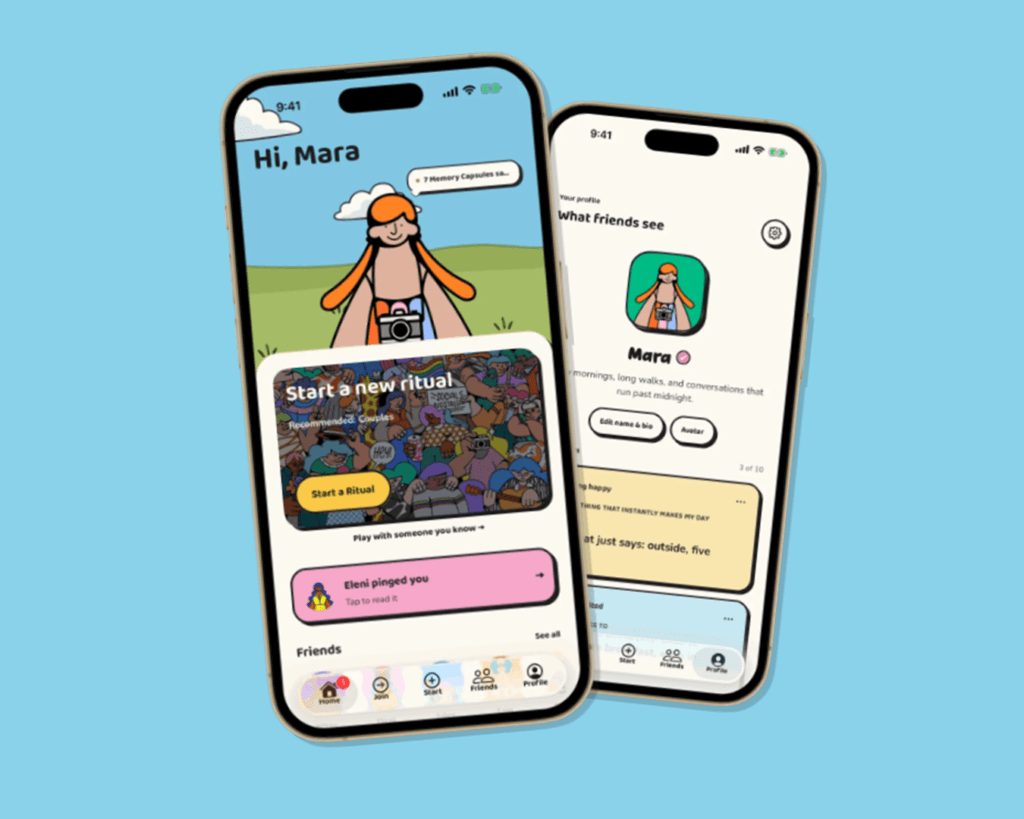
The social question game that gets everyone talking.
Play Bonded. A social question game for friends, dates, parties, and teams.
Bring the people. We’ll bring the questions.
Ready to find out who actually dares to answer?
Conclusion
Every couple goes through seasons of distance.
Sometimes the distance comes from stress. Sometimes from routine. Sometimes from unresolved hurt. Sometimes from simply forgetting to slow down and really see each other.
But distance does not have to be the end of the story.
These 36 deep questions for couples who want to reconnect are invitations back to each other. They can help you rebuild emotional intimacy, improve communication, strengthen trust, revive affection, and create a healthier relationship from here.
Start small.
Choose one question tonight. Ask it gently. Listen fully. Stay open.
You may be surprised how much closeness can begin with a single honest conversation.
References
- American Psychological Association — Happy couples: How to keep your relationship healthy
- The Gottman Institute — Improve Your Relationship by Paying Attention to “Bids”
- The Gottman Institute — Turn Towards Instead of Away
- Harvard Gazette — Good genes are nice, but joy is better
- Harvard Study of Adult Development — Official Website
FAQ: Deep Questions for Couples
What are the best deep questions to ask your partner?
The best deep questions invite vulnerability, not just facts. Questions that begin with “Have you ever felt…”, “What do you wish I understood better…”, or “What’s something you’ve never told me…” open real conversations. They move the exchange from information-sharing to genuine closeness.
How often should couples ask each other deep questions?
Once a week, even for just 20 minutes with 2–3 questions, can meaningfully improve emotional intimacy over time. Research on self-disclosure shows that the frequency matters less than the quality of listening that follows each question.
Can deep questions help a struggling relationship?
They can — but they’re a bridge, not a fix. Deep questions create conditions for honesty and empathy. They work best when both partners approach them with genuine curiosity rather than as a test or a substitute for therapy.
What makes a question ‘deep’ rather than just personal?
A deep question requires reflection, not just recall. “What’s your favourite memory of us?” is personal. “What’s a moment you wish we could have back?” is deep — it involves vulnerability, longing, and a willingness to revisit something unfinished.
Are deep questions good for new couples too?
Absolutely. Arthur Aron’s original research on the 36 questions was conducted on strangers and new acquaintances. Deep questions accelerate intimacy at any stage — the key is mutual willingness, not relationship length.
Try These Tonight in Bonded’s Deep Dive Mode
Pick a question and actually ask it out loud tonight. Open Bonded’s Deep Dive mode and let it guide you both, one honest question at a time. When you want more, our questions for couples and 100 questions to feel closer pick up right where these leave off.
Keep the connection going
This guide is one path through our wider Questions & Dares library, with prompts for dates, partners, friends, and groups.
Want more structure than a list? Browse games for couples built for shared attention, laughter, and a little surprise.