
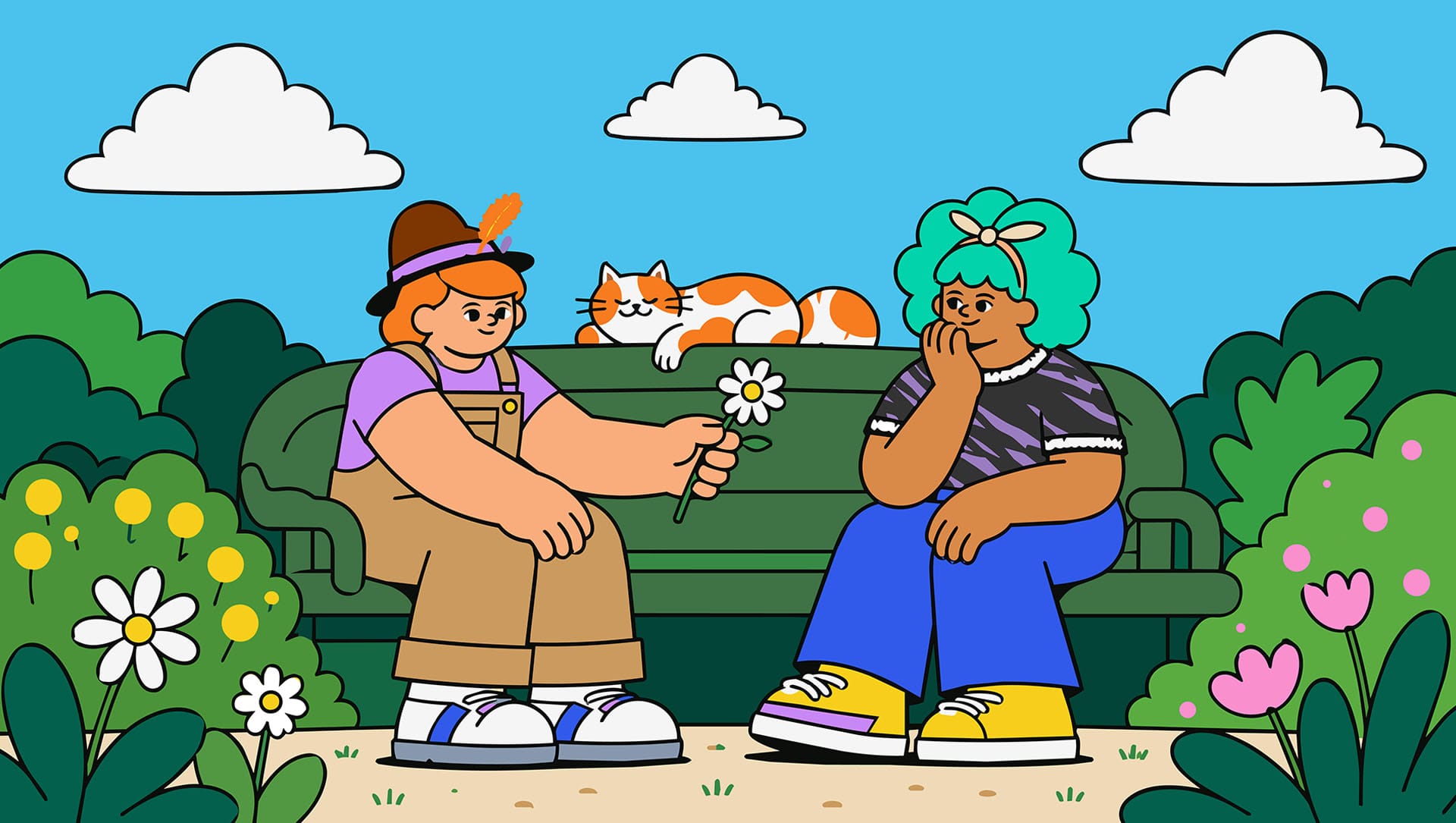
There’s a specific quiet that settles over a table about ten minutes into a good two-player board game. The phones are face down. Neither of you has checked them. One of you is squinting at the other, trying to figure out what they’re planning, and the other is pretending very hard to look innocent.
That quiet is the whole reason to own a two-player board game.
Most 2 player board games skip the part that actually matters when the two people at the table are a couple, or two friends, or a first date who ran out of things to say: a two-player game is one of the last situations left where you sit across from one person and pay attention to them for an hour straight.
So this is a list sorted by the kind of night you want, and by what each game quietly does to the two of you.
The games are genuinely good. That part’s easy.
The harder, more interesting question is which one is right for this evening, with this person.

Why Two-Player Games Work When So Much Else Doesn’t
Watching a movie together is nice, but you’re both facing the same direction, aimed at a screen instead of each other.
Scrolling side by side isn’t connection, it’s parallel play, the thing toddlers do before they learn to actually interact.
A two-player game turns you toward each other. That sounds small. It isn’t. The psychologist John Gottman spent decades watching couples and found that the strongest relationships were built on thousands of tiny moments of turning toward each other instead of away, small bids for attention that get answered. A game is a machine for manufacturing those moments. Every turn is a bid. Every reaction is an answer.
There’s also the novelty factor. Research on relationships keeps landing on the same slightly unromantic finding: couples who do new, mildly challenging things together report feeling closer than couples who stick to comfortable routines.
It’s the logic behind Arthur Aron’s work on self-expansion, the idea that we bond with people who help us grow, and that shared novelty gets read by the brain as shared aliveness. Learning a new game together, fumbling the rules, laughing at how badly you both played the first round, that’s novelty you can buy for twenty dollars and keep on a shelf.
And unlike a lot of connection advice, this one requires no vulnerability speeches.
You don’t have to open up.
You just have to play, and the opening-up tends to happen sideways, in the trash talk and the surprised laughter and the way someone’s face gives away exactly how competitive they secretly are.
How to Pick One Without Starting a Fight
Here’s the thing nobody tells you: the wrong two-player game can absolutely ruin an evening. A brutally competitive strategy game handed to a couple where one person plays to win and the other plays to have fun is not a date. It’s a small, felt-lined boxing match.
So before the games themselves, one honest question. Do the two of you want to be on the same team tonight, or do you want to go head to head? Both are good. They are not the same night. Cooperative games (you versus the game) build a very different feeling than competitive ones (you versus each other). If you’re not sure, start cooperative. Nobody has ever broken up over losing to a game together.
Best Cooperative 2 Player Games (You vs. the Game)
You’re on the same side. You win together or lose together, which means the tension goes into the game instead of between you.
These are the ones to reach for on a tender night, or with someone whose competitive streak you haven’t tested yet.
- Codenames Duet. The two-player version of the party classic, and secretly better than the original. You’re both spymasters trying to get each other to guess the right words on a grid using one-word clues, racing a timer, avoiding the one word that ends the game instantly. It reveals, fast, how your partner’s brain makes associations. You learn that “beach” obviously means three specific things to them and none of them are the ocean.
- Sky Team. You’re landing a plane together. One pilot, one co-pilot, placing dice into the cockpit to manage the approach. The catch: once the round starts, you can’t talk about your plan. You have to read each other silently and hope you’re in sync. It’s a startlingly accurate simulation of every time you’ve tried to parallel-park a relationship without using words.
- The Crew. A cooperative trick-taking card game that sounds dry and plays like a heist. You have missions to complete, but you can barely communicate, so half the game is trying to signal your partner without being able to say the thing you desperately need to say. Couples who play this develop a private language within about three missions.
- Hanabi. You hold your cards facing outward, so you can see everyone’s hand but your own. You’re building a fireworks display together using only careful hints. It’s an exercise in trusting that the other person sees something you can’t, which, romantically speaking, is most of the point.
- Forbidden Island. The gentle gateway co-op. The island is sinking, you’re grabbing treasures and racing to the helicopter pad before it goes under. Low stress, satisfying, and it teaches the core cooperative skill of making a plan together and then watching a dice roll blow it up. Good practice for life.
Best Quick 2 Player Games (Under 30 Minutes)
For a weeknight, or after dinner when neither of you has the attention span for a rulebook. These teach in five minutes and end before anyone gets bored.
Perfect for the loser demanding a rematch, which they will.
- The Fox in the Forest. A gorgeous little trick-taking duel with a fairy-tale deck, where certain cards bend the rules the moment you play them. It’s tense and personal in the best way, the kind of game where winning feels clever and losing feels like you almost had it.
- Jaipur. Two merchants, one market, a lot of camels. You’re collecting and selling goods faster than your opponent, and it moves quickly enough that a best-of-three fits in half an hour. Elegant, a little cutthroat, and weirdly addictive.
- Lost Cities. You’re mounting expeditions, playing cards in ascending order, deciding again and again whether to commit to a risky venture or bail. It’s a press-your-luck game dressed as an adventure, and it produces a very particular groan when your partner plays the exact card you were saving.
- Love Letter. Sixteen cards. That’s the whole game. You’re trying to get your love letter to the princess through a court full of people who might rat you out, and it’s pure bluff and deduction. Learn it in two minutes, play it for years.
- Hive. No board at all, just tiles covered in bugs that you place and move to surround your opponent’s queen bee. People call it “chess without the setup,” and they’re not wrong. It’s abstract, portable, and it will show you exactly how patient (or not) your partner really is.

Best Strategy 2 Player Games (For a Real Evening)
When you both want to sink your teeth into something.
These take longer, ask more of you, and reward the couples who like a bit of friendly ruthlessness. Bring snacks.
- 7 Wonders Duel. Widely considered the gold standard for two players, and it earns it. You draft cards to build your civilization, chasing military dominance, scientific supremacy, or a points victory, in a tug-of-war where every card you take is one your opponent can’t. Thirty minutes, endlessly replayable, and genuinely thrilling. If you buy one strategy game for two, this is it.
- Patchwork. Designed specifically for two by Uwe Rosenberg, this one has you buying fabric patches to build the best quilt while managing a shared time track. It looks cozy, almost twee. It is quietly one of the sharpest little contests you can put on a table, and the loser always insists they had a better quilt anyway.
- Azul. You’re drafting beautiful ceramic tiles to decorate a palace wall, and the tactile pleasure of the pieces almost distracts from how mean the game gets. You can force your opponent to take tiles they don’t want, which is a level of pettiness the best relationships can absolutely accommodate.
- Splendor Duel. The two-player reworking of the gem-collecting classic, tuned to be tighter and more confrontational. You’re building an engine of little bonuses that compound, and there’s a real satisfaction in watching your economy come together while your partner realizes, one turn too late, what you were building.
- Carcassonne. Tile by tile, you build a medieval landscape of roads, cities, and fields, claiming them for points. The clever part with two players is that you choose the temperature. Play peacefully, each tending your own board, or start stealing each other’s cities and watch a calm evening turn spicy.
Best Cozy 2 Player Games (Low Conflict, High Warmth)
Sometimes you don’t want a fight, even a friendly one.
These are the games where you can play alongside each other, chat while you do it, and end the night feeling calmer than you started. The board-game equivalent of a good candle.
- Cascadia. You’re building a Pacific Northwest landscape, placing habitat tiles and tucking wildlife into them. There’s almost no direct conflict, just a lovely, meditative puzzle you each solve on your own side of the table, comparing notes as you go. It’s the one to teach someone who thinks they hate board games.
- Calico. Cats and quilts, which sounds adorable and is, until you realize it’s a genuinely demanding spatial puzzle that will melt your brain in the gentlest possible way. You’re arranging fabric to attract cats, and the quiet “hmm” it pulls out of people is a beautiful thing to share a couch over.
- Everdell. The one that looks like a picture book and plays like a full evening. You’re building a city of woodland creatures at the base of a giant tree (yes, there’s a cardboard tree), gathering resources across the seasons. It’s gorgeous, it’s generous, and it’s the kind of game you finish and immediately want to set up again.
- Boop. Do not be fooled by the kittens. You place little cats onto a quilted bed, and each one “boops” its neighbors off, and you’re trying to line up three in a row. It looks like the sweetest game on this list and it will teach you, warmly, that your partner has a strategic mean streak you never suspected.
Best 2 Player Games for People Who Swear They Hate Board Games
Every couple has one of these. The person who hears “board game” and pictures a four-hour slog of rules and resentment from childhood.
These games are the antidote. No dry rulebooks, no analysis paralysis, just the fun parts.
- Wavelength. You’re trying to read your partner’s mind on a spectrum. The dial is hidden somewhere between “overrated” and “underrated,” and you give a clue, and they guess where your brain landed. It generates the single most revealing conversations of any game here, and it plays like an argument you’re both enjoying.
- So Clover. A cooperative word game where you write clues that connect pairs of words, and your partner tries to reconstruct your logic. It’s warm, it’s fast, and it lives entirely in the gap between how you think and how they think, which is a very nice gap to spend an evening exploring.
- MindBug. A duel of monsters with one deliciously simple twist: when your opponent plays a creature, you can steal it. That single rule creates constant, funny agony over whether to play your best card. It teaches in ninety seconds and is impossible to take too seriously, which is exactly what the board-game skeptic needs.

What Playing Together Actually Reveals
Here’s the part the other lists leave out.
How someone plays a game is, quietly, how they show up in general.
The partner who goes easy on you when they could crush you is telling you something. So is the one who never does. The person who gets genuinely rattled when a plan falls apart, the one who laughs it off, the one who wants to talk through every option before committing, the one who just goes, all of it is real information delivered in a low-stakes, laughing-friendly package.
You will learn more about how your partner handles frustration in one game of 7 Wonders Duel than in a month of “how was your day.”
None of this is a test, and it’s a mistake to treat it like one.
The point isn’t to judge how someone plays. It’s that the game gives you a shared thing to react to, and in reacting, you both stop performing and start just being yourselves. The board is the container. What happens between you is the point.
That’s also why the losing matters less than people think. Nobody remembers the score from a game two weeks ago.
They remember that you both got the giggles when the plane crash-landed, or that you invented a stupid nickname for the camel token, or that they let you win and you knew and let them think you didn’t know.
That shared laughter isn’t filler, either; researchers who study play in adults keep finding it does real, quiet work on a bond. Those are the moments that stack up into feeling close. A game is just a reliable way to keep making them.
A Few Things to Keep in Mind
Start easier than you think you need to.
The instinct is to buy the impressive-looking game with the big box. Resist it. A game you both actually finish beats a masterpiece that intimidates one of you into never wanting a rematch.
Read the rules before, not during. Nothing kills the mood like one person hunched over a rulebook while the other checks their phone. Skim it solo beforehand, or watch a five-minute explainer, and come to the table ready to just play.
Let the winner be gracious and the loser be dramatic. A little theatrical outrage is part of the fun. Genuine sulking is not. If a game keeps turning one of you sour, it’s the wrong game for the two of you, and that’s fine. Shelf it and try a cozy one.
And keep one quick game permanently in reach. The couples who actually play regularly aren’t the ones with the biggest collections.
They’re the ones with a small game (Jaipur, Love Letter, The Fox in the Forest) that lives on the coffee table and gets pulled out in the fifteen minutes before bed. Ritual beats ambition. If you want more ways to build that kind of ritual, we’ve collected sixty ways to make a night in feel different, and games are only the beginning.

FAQ: 2 Player Board Games
Answers to the questions people actually ask before clearing off the table.
What is the best 2 player board game?
For most couples, 7 Wonders Duel is the best all-around 2 player board game: it plays in about 30 minutes, stays deep across hundreds of games, and offers multiple paths to victory. If you prefer cooperating over competing, Codenames Duet or Sky Team are the strongest picks, since you win or lose as a team.
What board games can be played with just 2 people?
Many games are designed for exactly two, including Patchwork, Hive, 7 Wonders Duel, The Fox in the Forest, and Sky Team. Plenty of larger games also shine at two, like Azul, Carcassonne, and Jaipur. Look for a “2 players” label or a dedicated two-player mode when choosing.
Are board games good for couples?
Yes. Two-player games turn couples toward each other instead of toward a screen, create dozens of small moments of shared attention, and introduce the kind of novelty that research links to feeling closer. They also reveal how a partner handles competition, frustration, and teamwork in a low-stakes, playful setting.
What is a good 2 player board game for beginners?
Cascadia, Jaipur, and Love Letter are ideal for beginners: each teaches in under ten minutes, needs almost no reference to the rulebook mid-game, and stays fun once you know it. For couples who want to cooperate rather than compete, Forbidden Island is a gentle, satisfying starting point.
What two-player games aren’t overly competitive?
Cooperative games like Sky Team, Codenames Duet, and Hanabi remove head-to-head competition entirely, since you play as a team against the game. For low-conflict competitive play, Cascadia and Calico let each person build their own board with little direct interference, keeping the mood warm.
One Last Thing
The best two-player game isn’t really about the game. It’s about the hour you spend across from one person with nothing else pulling at your attention. That’s rarer than it should be, and a box on a shelf is a surprisingly good way to protect it.
So pick one that fits the night you actually want. Cooperative if you want to feel like a team. Quick if it’s a Tuesday. Cozy if you just want to be near each other. The right choice is whichever one gets the two of you to the table and keeps you there, laughing, plotting, pretending very hard to look innocent.
That’s what we’re building at Bonded, too. Games and questions and prompts designed to do one thing: move two people from small talk to actually being present with each other. A board game does it with tiles and cards. Our app does it in your pocket, for the nights the box stays on the shelf. If a good game reminds you how much you like paying attention to someone, that’s the whole idea.
You might also enjoy: