
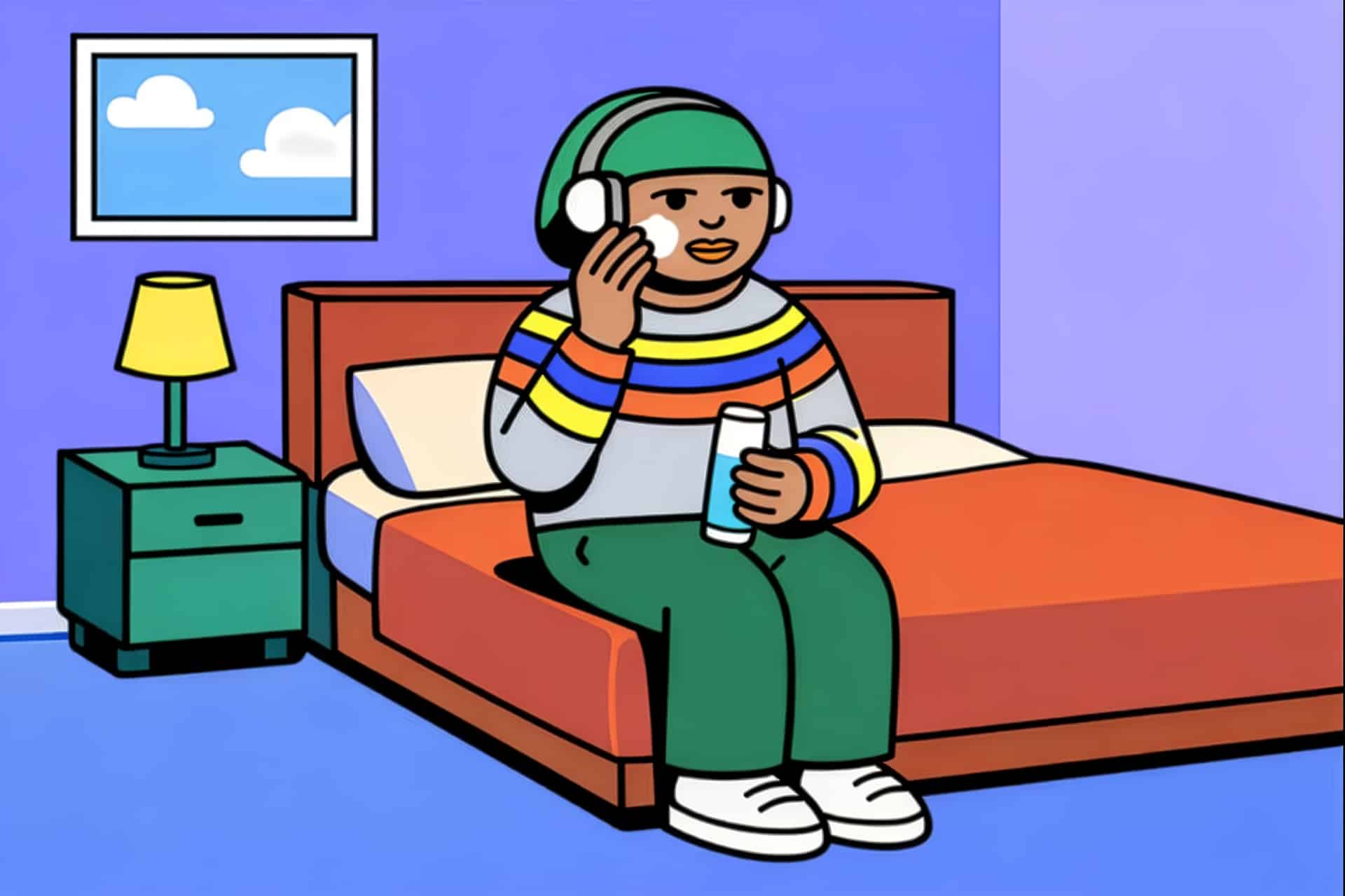
You cleared the evening. You said the words “date night” out loud, to each other, on purpose. There was food. There may even have been a candle.
And then somewhere around 9:40 you looked over and they were on their phone, and you realized you’d been on yours for a while too, and the show neither of you was watching was still playing to an empty room.
Nobody did anything wrong. That’s the strange part.
The problem with most at home date night ideas isn’t that they’re bad ideas. It’s that they’re activities, and what you actually needed was attention. You can do a wine tasting in your living room and still spend the whole night three feet apart, thinking about the laundry.
Why At-Home Date Nights Fail (And It Isn’t the Ideas)
Your house is not neutral territory. It’s the room where you pay bills, the couch where you scroll separately every night, the kitchen with the dish you’ve both been ignoring since Sunday. Every surface in it is quietly asking you to be a household instead of a couple.
Going out solves this by accident. A restaurant has no laundry. A restaurant makes you sit across from each other, with nothing to do but look at the person you came with. The magic of going out was never the food.
It was the constraint.
The second problem is subtler. Most date-night-at-home ideas are what you might call parallel activities. You watch a movie: you sit side by side, facing away from each other, in the dark, not speaking, for two hours. You order takeout: you eat. These aren’t bad. But they don’t require the other person to be there, and some part of both of you knows it.
Psychologist Arthur Aron spent decades on a related question and found something useful: couples who did novel and genuinely engaging activities together reported higher relationship quality than couples who did pleasant but familiar ones. Not more expensive. Not more romantic. Novel and engaging. The brain treats “this is new and I’m doing it with you” as evidence of aliveness, and it quietly assigns some of that aliveness to the person next to you.
Which is why the ideas below aren’t organized by budget or season. They’re organized by what they actually do to you.

The Only Rule That Makes This Work
Put the phones in another room. Not face-down on the table. Another room, with a door.
Everything else on this list is optional. This isn’t, and you already know why. A phone on the table is a third person at dinner who might, at any moment, say something more interesting than you.
Two hours. You’ll survive.
Ideas for When You’re Both Exhausted
Every date night article assumes you have three free hours and the energy to make fresh pasta. Most nights you have forty minutes and the emotional range of a houseplant. These are for those nights, and they count.
- Put on two songs and dance in the kitchen. Badly. The whole thing takes seven minutes and changes the temperature of the entire evening.
- Lie on the floor with the lights off and listen to one album side, start to finish, not talking.
- Take turns giving a ten-minute shoulder massage. Set a timer so nobody has to keep score.
- Order the exact food you ate on your first date, if you can remember it. If you can’t, argue enjoyably about what it was.
- Sit outside for fifteen minutes. Balcony, stoop, fire escape, car. Somewhere that isn’t the couch.
- Read the first chapter of the same book out loud to each other, trading every few pages.
- Scroll through photos from a year neither of you remembers well and reconstruct it together.
- Plan, in elaborate detail, a trip you have no intention of taking.
- Play twenty questions. The original one. It’s better than you remember.
- Shower together with no agenda whatsoever, which is harder than it sounds and nicer than it sounds.
Notice that none of these require a plan, a purchase, or a personality. Low effort is not the same as low value. A tired couple who spent twenty minutes on the kitchen floor talking is doing better than an ambitious couple who fought about the fondue.
Ideas That Make You Actually Talk
Couples who’ve been together a while don’t stop talking. They stop asking. Conversation collapses into logistics, and logistics feel like intimacy because they involve both of you, until one day you realize you haven’t learned anything new about this person in eight months.
These fix that. Not by forcing depth, but by giving you a container for it.
- The high, the low, and the weird: each of you names the best part of your week, the worst, and the strangest.
- Work through a real question game together instead of freestyling. Structure removes the awkwardness of “so, uh, what are you thinking about.” Our list of date night questions is built for exactly this.
- Interview each other as if you’d just met. Take it seriously for a full twenty minutes and watch what happens.
- Tell each other, honestly, what you thought of the other person in the first ten minutes of meeting.
- Read your old text messages from the first month out loud. Bring something to hide behind.
- Each write down three things you want more of in the next year. Swap papers. Don’t defend the list, just read it.
- Describe your ideal ordinary Saturday five years from now, in detail, down to what’s for breakfast.
- Name something you’ve quietly changed your mind about since you met.
- Tell each other the parts of your day you’d normally skip because they’re too small to mention.
- Ask the question you’ve been not-asking. You know the one. (This is a whole evening, not a warm-up.)
The last one is the real one. A question with zero social risk rarely produces any real closeness, and most couples have a small pile of unasked questions gathering dust. If you want more in this territory, Questions for Couples runs the full range from easy to genuinely brave.

Ideas That Involve Cooking (Without the Fight)
Cooking together is on every date night list and it ruins a startling number of evenings, because two people in a small kitchen with one plan is not a date, it’s a jurisdictional dispute.
The fix is to give each person a domain.
- One person cooks, the other is bartender and DJ. Full authority over drinks and music, no commentary on the food. Swap next time.
- Run a Chopped-style challenge: pick four random ingredients from your own cupboards and each make something. Judging is mandatory and dishonest.
- Each cook one dish from your own childhood and explain, while eating, why it mattered.
- Blind taste test the store-brand version against the expensive version of five things. Learn something humbling.
- Make pasta from scratch. It is 90 minutes of mess and it is genuinely delightful.
- Recreate the meal from your first date as accurately as you can manage.
- Deliberately cook something neither of you has ever made, accepting in advance that it will be bad.
- Dessert only. Three desserts. No dinner. Nobody is going to stop you.
Ideas That Make You Laugh
Shared laughter is not filler. Work by Sara Algoe and Laura Kurtz, covered well by the Greater Good Science Center at Berkeley, found that couples who laughed together reported more relationship satisfaction and saw each other as more similar, even after accounting for how long they’d been together. The useful detail is that it’s the together that does the work. Laughing at the same thing at the same moment is a small, repeated signal that you see the world the same way.
- Rate your own first-date text messages out loud, with commentary, like sports analysts.
- Draw each other in sixty seconds without looking at the paper.
- Pick the worst-reviewed movie you can find and commit to it fully.
- Play truth or dare. It is not just for teenagers, and the dares are better when you actually know each other.
- Do impressions of each other’s families. Escalate carefully.
- Read your own social media posts from ten years ago aloud. Take breaks as needed.
- Blindfolded snack identification, with a forfeit for wrong answers.
- Build a piece of flat-pack furniture together and see who cracks first. (This is either a date or a diagnostic.)

Ideas That Make the House Feel Like Somewhere Else
You can’t leave. But you can change the room enough that your brain stops filing the evening under “home.”
- Eat dinner in a room you never eat in. The bedroom floor. The hallway. It’s absurd and it works immediately.
- Build a camp in the living room and sleep there. Actually sleep there.
- Restaurant night: print a menu, set a reservation time, and make each other wait for it.
- Candlelight only, all evening, everywhere, including the trip to the bathroom.
- Rearrange the furniture before dinner. Live in the new arrangement for one night.
- Night picnic on the balcony, the roof, or the floor by the window if the weather is hostile.
- Hotel rules: nobody does a single chore after 7pm, and no one mentions one either.
- Build a fort. You have blankets. You have chairs. This is not complicated.
If you want to go further and design the whole evening deliberately, our guide on how to plan a romantic date night at home walks through the mechanics of setting the room, the sequence, and the mood.
Ideas That Involve Touch
Long-term couples touch constantly and almost never on purpose. A hand on the back while passing in the kitchen is affection, but it isn’t attention. These are deliberate.
- Timed massage swap: ten minutes each, phones gone, no talking required.
- Slow dance to one full song, in the middle of the room, in the middle of a Tuesday.
- Learn one partner stretch from a video and help each other into it, badly.
- The six-second kiss. The Gottman Institute recommends it as a daily ritual because six seconds is long enough that you have to actually be present for it.
- Four minutes of uninterrupted eye contact. It sounds like nothing. It is not nothing.
- Trace a word or a shape on their back and have them guess it.
Ideas for Competitive Couples
Some couples connect through tenderness. Some connect through the sincere desire to destroy each other at Scrabble. Both are valid, and if you’re the second kind, forcing a candlelit heart-to-heart is going to feel like wearing someone else’s coat.
- A proper two-player board game, played over several weeks, with a running score on the fridge.
- Trivia about each other, written in advance, scored ruthlessly.
- A video game tournament, ideally something neither of you is good at.
- Cards, with stakes: loser handles every Monday chore for a month.
- A round of would you rather, where the only rule is you have to defend your answer.
- A timed cook-off. Same ingredients, thirty minutes, one judge who is also a contestant.
Ideas for a Long Night
When you do have the whole evening, spend it on something with a shape. An evening with a beginning, a middle, and an end is remembered as an event. An evening of three hours on the couch is remembered as nothing.
- Progressive dinner: three courses in three different rooms, moving between each.
- A tasting flight of wine, whisky, tea, or cheap beer, with labels hidden and scores written down.
- Watch the film one of you loves and the other has somehow never seen, then talk about why it matters to them.
- Draw your life maps on paper, side by side, and walk each other through them.
- Write a letter to each other to be opened in one year. Seal them. Actually put them somewhere.
- Work through Arthur Aron’s 36 questions in a single sitting, the way the study intended.
Ideas for When You’re Apart
Long distance, a work trip, a night shift. Date night still exists, it just needs synchronizing.
- Order the same meal, eat it on video at the same time.
- Sync a movie and keep a call open, muted, so you hear each other laugh.
- Read the same chapter separately, then talk about it.
- Send each other a playlist and listen to both at the same hour.
- Play a question game over text, one question a night, no rushing.
How to Make It a Ritual, Not a One-Off
The couples who keep doing this have one thing in common, and it isn’t discipline. They made it small enough to survive a bad week.
A weekly two-hour date night collapses the first time someone gets sick. A weekly forty-minute one, on the same night, at the same time, with the phones in the other room, survives almost anything. The Gottman research on rituals of connection points at the same thing: what protects a relationship is not the grand gesture but the repeated, unremarkable, reliable one.
Pick the night. Protect it the way you’d protect a meeting with someone you’re afraid of disappointing.
Then let it be boring sometimes. Not every date night has to produce a revelation. Some of them just have to happen.

A Few Things to Keep in Mind
Don’t stack three ideas into one evening. Ambition is how date night becomes a project with deliverables. One idea, done slowly, beats three done efficiently.
Let it be awkward for the first ten minutes. Switching out of household mode takes time, and the awkwardness is not a sign that it’s failing. It’s a sign that something is changing.
Take turns planning, and don’t critique the other person’s choice. The most corrosive thing in a long relationship isn’t conflict, it’s the slow discovery that effort goes unnoticed. If they planned it, they were thinking about you.
And if you try one of these and it’s a disaster, that’s a story now. Some of the best evenings are the ones that went wrong in an interesting way.
FAQ: At-Home Date Night Ideas
What can we do for a date night at home?
Pick one activity that requires you to face each other rather than sit side by side. Cook a meal with divided roles, play a two-player game, work through a question list, or eat dinner somewhere in the house you never eat. The key is a shared focus, not an impressive plan.
How do you make an at-home date night feel romantic?
Change the environment before you change the activity. Candles instead of overhead lights, phones in another room, no chores after a set hour. Romance at home comes from the room stopping being a household space, and that takes about ten minutes of deliberate effort to arrange.
What are some cheap at-home date night ideas?
Almost everything that works is free. Slow dancing to one song, a timed massage swap, reading old text messages aloud, building a fort, four minutes of eye contact, or a walk-free picnic on the living room floor. Cost has never been the variable that determines whether a night feels close.
How often should couples have a date night?
Weekly, and shorter than you think. A protected forty minutes every week beats an ambitious three-hour evening once a month, because the short one survives illness, deadlines, and exhaustion. Consistency is what makes it a ritual rather than an occasional apology for being busy.
What can we do instead of watching TV on date night?
Anything that needs both of you present. Television is a parallel activity: you can do it beside someone without engaging them at all. Swap it for cooking with assigned roles, a competitive game, a question list, or a conversation with a container around it.
One Last Thing
Nobody drifts apart during an argument. Arguments are loud, and both people are paying attention.
Couples drift in the quiet weeks. The ones where everything is fine, and dinner happens, and the show plays, and neither of you asks the other a single question you don’t already know the answer to. It’s nobody’s fault. Nothing in modern life is designed to make you turn toward each other, and quite a lot of it is designed to make you look at a screen instead.
So the point of an at-home date night was never the fondue. It’s a two-hour argument, made physical, against the drift.
Pick one idea. Put the phones in the other room. See what happens.
Bonded Studio builds games, prompts, and tools for exactly this moment: two people, one room, and the small distance between them.
You might also enjoy:
- How to Plan a Romantic Date Night at Home
- Date Night Questions
- Questions for Couples: 150+ Questions to Ask the Person You Love
- Truth or Dare for Couples
Keep the connection going
Keep building the evening with our complete guide to date night games for couples, from low-energy questions to playful at-home ideas.
Want more structure than a list? Browse games for couples built for shared attention, laughter, and a little surprise.