

It’s 9pm on a Wednesday. Neither of you has the energy to start a show you’ll both fall asleep through, and the takeout is gone. The board game shelf is right there, and one of you says the dangerous sentence: “Want to play something?”
Here’s what nobody tells you. The question isn’t which board game is best. It’s which board game is right for the two of you, tonight, in the mood you’re actually in.
A tense week doesn’t want the same game a lazy Sunday wants. Most lists of board games for couples rank games by how good they are. This one sorts them by what they’ll actually do to you as a pair, because a game that makes one couple laugh until they cry will make another couple quietly resentful by turn three.
Why a Board Game Is a Surprisingly Good Test of a Relationship
A board game is a container. You agree to a small set of rules, you sit across from each other, and for forty minutes the usual noise goes quiet. No phones. No dishes. Just the two of you and a shared problem to solve or a small mountain to climb over each other.
That structure does something conversation alone often can’t. It gives you a reason to be fully present without the pressure of “so, how are we doing?” You learn things sideways. How your partner handles losing. Whether they play to win or play to keep you both in it. How they react when a plan falls apart at the last second.
There’s real science under this. Psychologist Arthur Aron’s research on couples who share novel and challenging activities found they report more relationship satisfaction afterward, an effect he traced to what he called self-expansion. Trying something new together, even something small, makes the relationship feel bigger. A game you’ve never played is exactly that kind of novelty, in a box, for twenty dollars.
The Gottman Institute has a name for the small recurring things couples do on purpose: rituals of connection. Game night, done regularly, is one of the easiest ones to build. It costs nothing but the evening.
There’s a quieter benefit too. A game gives you something safe to compete about. Most couples have a few real disagreements they circle around for years, and none of them are safe to poke at 9pm on a weeknight. A board game hands you a stand-in: a low-stakes rivalry with clear rules and a definite end, where you can be as competitive as you like and nobody wakes up hurt. You get the spark of tension without the cost of the real thing.
The trick is choosing well. A game that fits your mood becomes a good memory. A game that fights your mood becomes the reason one of you goes to bed early. So the rest of this is organized around feeling first, game second.

How to Pick One Without Turning It Into a Whole Thing
Don’t overthink it. Read your own energy first, then match the game to it. Tired and frayed? Reach for cooperative or cozy. Feeling playful and a little competitive? A light head-to-head game gives you heat without a real fight. Wide awake and both a bit nerdy about it? That’s when the thinky ones come out.
The categories below are sorted by exactly that: what each game does to the two of you. Pick the feeling, then pick the game.
Games That Put You on the Same Team
Cooperative games are the reset button. You’re not playing against each other, you’re playing against the game, which means you win or lose as a unit. Perfect for a week where you’ve been slightly out of sync and need to remember you’re partners.
- Codenames: Duet. The couples version of the party classic. You give one-word clues to help each other find the right cards, and every good guess feels like proof you think alike. When it works, it’s genuinely thrilling.
- The Crew: The Quest for Planet Nine. A trick-taking card game where you can’t fully say what’s in your hand, so you have to read each other. Fifty short missions that get harder as you go. It’s the closest a game gets to learning a private language together.
- Sky Team. The two of you land a plane, one as pilot, one as co-pilot, in near silence. Tense in the best way. You’ll high-five when the wheels touch down.
- Pandemic. Save the world from four diseases before they spiral. The original co-op that hooked a generation of couples. Fair warning below about the one personality type it doesn’t suit.
- Hanabi. You hold your cards facing out, so you can see everyone’s hand but your own, and you build a fireworks display through careful hints. Small box, big payoff, endlessly replayable.
Games With Just Enough Competition
Sometimes you want to beat each other a little. These are the games that give you a genuine rivalry without the scorched-earth feeling that ruins the rest of the night. Close scores, quick rounds, and nobody actually gets hurt.
- Jaipur. The gold standard of two-player games. You’re rival traders grabbing goods and racing to sell at the right moment. Fast, tense, and over in twenty minutes, which is exactly why couples play it three times in a row.
- Patchwork. A quilting game, of all things, and one of the most quietly cutthroat experiences you can have. You’re both racing to fill a board with fabric while managing time and buttons. Adorable and ruthless at once.
- Lost Cities. A card game about mounting expeditions where the real gamble is whether to commit or fold. Simple to learn, hard to master, and it’s been a date-night staple for over two decades for good reason.
- Azul. Drafting beautiful tiles to decorate a Portuguese palace. Gorgeous on the table, and just mean enough that you’ll gasp when your partner takes the tiles you needed.
- Splendor Duel. The two-player redesign of the gem-collecting favorite. Tighter, sharper, and built specifically for one opponent instead of four. A perfect fifteen-minute grudge match.
Cozy Games for a Low-Energy Night
Not every night has the fire for competition. These are the games you play while you talk, the ones with soft edges and no way to really lose the evening even if you lose the game. Put on a record, pour something, and drift through a few rounds.
- Cascadia. Building landscapes of forests and rivers and placing little wildlife tiles. Calm, satisfying, and impossible to feel stressed about. The board game equivalent of a deep breath.
- Calico. You’re making a quilt to attract cats, which tells you everything about the vibe. Puzzly and warm, with just enough decision-making to keep your brain gently occupied.
- Harmonies. A newer favorite that couples fell for fast. Stack colorful tokens to build habitats, place animals, and watch a tiny world take shape. Simple rules, surprising depth, lovely to look at.
- That’s Pretty Clever. A dice game you can play half-asleep and still enjoy. Roll, place, chain your choices into satisfying little combos. Great when one of you wants to play and the other is barely awake.
Games That Make You Laugh
Laughter is underrated as relationship glue. Shared laughter, specifically, does something measurable: research from the Greater Good Science Center links couples who laugh together to higher relationship quality and a stronger sense of closeness. These games manufacture it on purpose.
- Wavelength. You try to read your partner’s mind on a spectrum from “cold” to “hot,” and you’ll discover exactly how differently the two of you define “slightly weird.” The arguments about where the dial should go are the whole point.
- Sushi Go! A card-drafting game so charming it’s hard to stay competitive. You’ll narrate your dumpling strategy out loud whether anyone asked or not.
- Klask. Part board game, part air hockey, played with magnets under the board. Fast, physical, and guaranteed to produce at least one shriek. The rare game that gets you off the couch.
Games for Two People Who Actually Like a Challenge
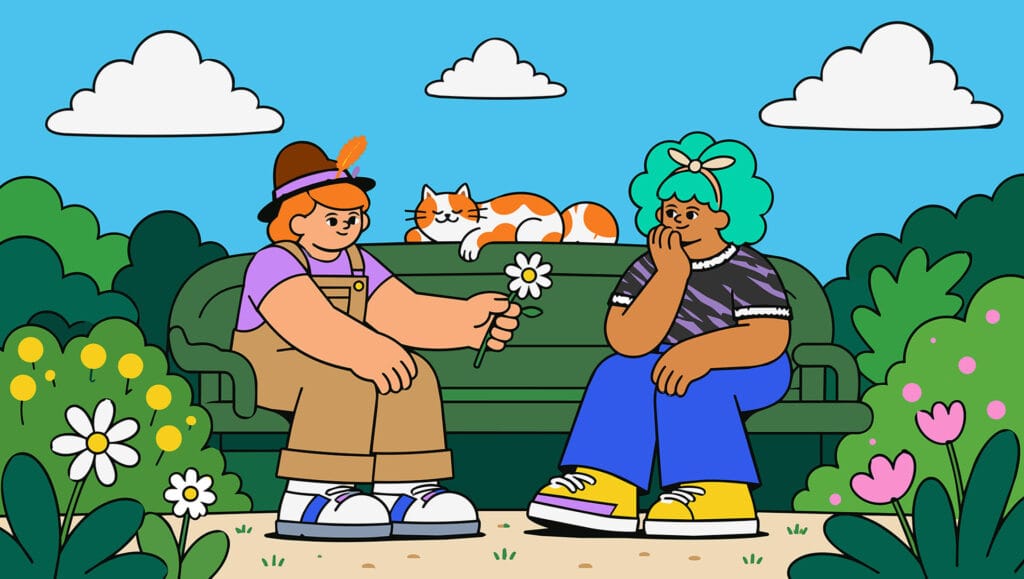
Some couples want a real fight for their brains. These are the deep two-player games, the ones that reward learning them over many nights and feel less like a game and more like a rivalry with a history.
- 7 Wonders Duel. Widely considered one of the best two-player games ever made. You build a civilization by drafting cards, and there are three completely different ways to win. Every game feels like a new argument you’re both trying to win.
- Hive. No board, no luck, no reading required. Just insect tiles and a chess-like battle to surround your partner’s queen bee. Travels anywhere and never plays the same way twice.
- Watergate. An asymmetric game where one of you is the Nixon administration and the other is the press trying to bring it down. Tense, thematic, and a genuinely fresh kind of head-to-head.
- Targi. A worker-placement game set in the Sahara, built from the ground up for exactly two players. Tight, clever, and a favorite of couples who like their games with a bit of crunch.
- Star Realms. A deck-building duel where you’re building a fleet and blasting your opponent’s health to zero. Cheap, portable, and dangerously easy to say “one more game” to.
Games You Grow Into Together
These are the long-haul games, the ones that unfold over many nights and leave permanent marks on the board or the story. Starting a campaign game together is a small commitment, a standing date you both look forward to. That anticipation is its own kind of intimacy.
- Gloomhaven: Jaws of the Lion. A cooperative dungeon adventure with a story that develops across dozens of sessions. The friendlier, gentler on-ramp to the famous monster of a game. Perfect for a couple who wants a shared project.
- Pandemic Legacy: Season 1. Pandemic, but the choices you make carry forward and change the game permanently. Couples who play it talk about it for years. It genuinely tests how you handle stakes together.
- My City. A lighter legacy game where you build and evolve a city over a series of games, with new rules revealed as you go. Lower commitment, high charm, and it resets so you can play again.
Games That Fit in a Pocket
Long distance visits, hotel rooms, the back of a restaurant while you wait for a table. These small-box games keep game night going anywhere, which matters more than it sounds. The couples who keep the ritual alive are the ones who can pull it out on a Tuesday in a strange city.
- The Fox in the Forest. A trick-taking card game designed for two, with a fairy-tale theme and a clever push-and-pull about winning, but not by too much. Beautiful art, tiny footprint.
- Love Letter. Sixteen cards, five minutes, endless replay. You’re trying to get your letter to the princess through a court of nobles. The best filler game ever made, and it fits in a coat pocket.
- Regicide. A cooperative game you play with a standard deck of cards, so it costs nothing if you already own one. You team up to defeat the royal court. Surprisingly deep for a free download of the rules.
- Cockroach Poker. A bluffing game that’s pure eye contact and lying to the person you love. Somehow this strengthens relationships rather than ending them. Mostly.
A Few Games to Skip If You Actually Like Each Other
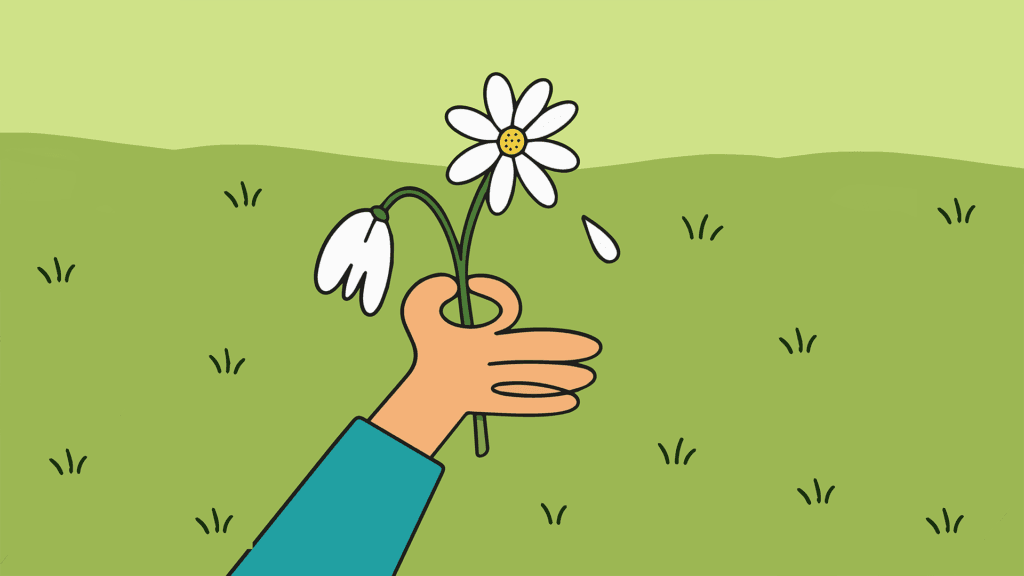
Here’s the part every other list leaves out. Some games are relationship hazards, not because they’re bad, but because of what they pull out of people. If your goal is a good night together, think twice about these.
Monopoly. The classic for a reason, and the reason is that it’s a two-hour lesson in slow financial resentment. It rewards ruthlessness, drags long after the outcome is decided, and has ended more evenings than it’s saved. Play it with in-laws you’re trying to avoid, not the person you’re sharing a bed with.
Risk. Global domination sounds fun until turn nine, when one of you has clearly lost but has to sit there watching it happen for another hour. Long, luck-swingy, and built for grudges.
Any pure trivia game, if one of you always wins. Trivia isn’t a game so much as a standardized test of whose brain happens to store the right junk. If you already know who’s going to win every time, it’s not a contest, it’s a quiz your partner keeps losing. Skip it, or play in teams against a phone.
The pattern here is worth naming. The games that hurt couples are the long ones with a clear loser and a slow, public defeat. Keep it short, keep it close, and keep the losing painless. That’s the whole secret.
A Few Things to Keep in Mind
Play more than one round. The first game of anything is really just learning the rules, and the real fun starts when you both actually know what you’re doing. Build in time for a rematch.
Take turns choosing. If one person picks every night, the other slowly checks out. Trading the choice keeps it a shared ritual instead of one person’s hobby the other tolerates.
Let the loser off easy. The point was never the win. It was the forty minutes of undivided attention, the trash talk, the small in-jokes that only make sense to the two of you now. Keep score if you want, but hold it loosely.
And when you don’t want to set up a box at all, that’s fine too. The connection a good game creates is the guided-conversation kind, the reason to be present with a little structure around it. That’s the entire idea behind Bonded, minus the setup and the tiny cardboard pieces you’ll step on later.

One Last Thing
A board game night is a small thing that does a large amount of quiet work. It carves out an hour where the only job is to pay attention to each other, dressed up as something to do with your hands.
You don’t need the perfect game. You need a shelf with two or three you both like, a night with nothing better on, and the willingness to lose a few rounds gracefully. Start with one from the list above that matches how you feel tonight. The ritual builds itself from there.
Then, on the nights you’d rather talk than set up a box, that’s what we build for.
and essays on what it means to feel genuinely close to another person.
You might also enjoy:
- 2 Player Board Games: 22 of the Best for Two People Who Actually Want to Connect
- Games for Couples: 40+ Worth Playing, Sorted by What They Do to the Two of You
- Board Games for 2-4 Players: 26 That Deliver Whether It’s Two of You or Four
- At Home Date Night Ideas: 60+ Ways to Make the Night Feel Different
- Questions for Couples: 150+ Questions to Ask the Person You Love